
Personal Finance Tips for Canadians: Navigating the 2026 Economic Landscape

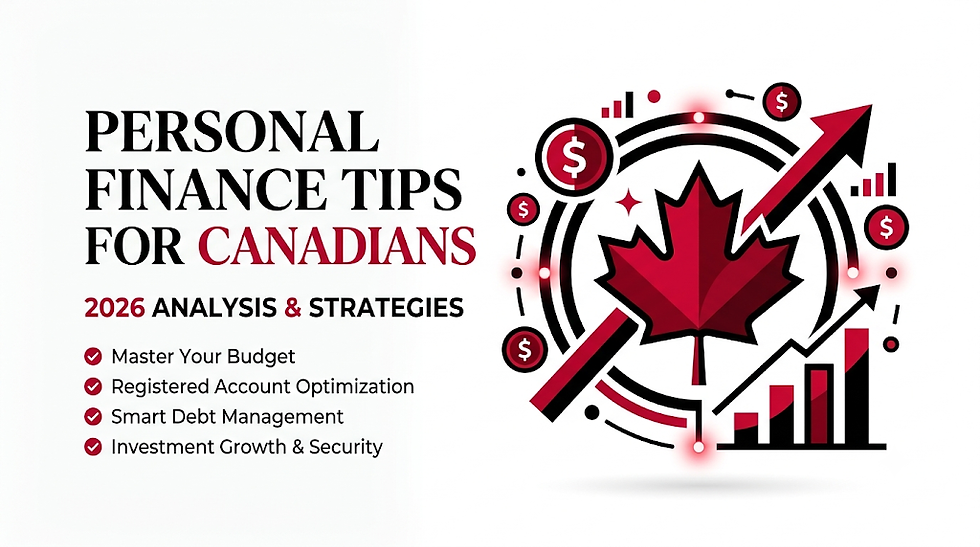
As we move through the second half of 2026, the Canadian economic environment remains a complex puzzle for many households. While headline inflation has stabilized near the 2.2% target, the "new normal" of higher baseline prices—particularly at the grocery store—continues to stretch household budgets. Combined with ongoing geopolitical uncertainties and fluctuating trade dynamics, managing your money effectively has never been more critical.
Whether you are looking to pay down debt, grow your investments, or simply find breathing room in your monthly budget, taking proactive steps is essential. This guide outlines actionable personal finance tips for Canadians designed to help you secure your financial future in 2026.
The 2026 Economic Reality: What You Need to Know
To make smart financial decisions, you must understand the environment you are operating in. As of July 2026, several factors are shaping the financial lives of Canadians:
Stable but Elevated Inflation: While runaway inflation is a thing of the past, food prices remain a pressure point, rising faster than the overall CPI.
A "Wait and See" Housing Market: The Canadian housing market is currently characterized by stability rather than rapid growth. With the Bank of Canada signaling a prolonged rate hold, potential homebuyers are seeing more predictable borrowing conditions, though affordability remains a significant hurdle.
Interest Rate Environment: After significant rate cuts in 2025, the central bank has entered a period of neutrality. This provides a more stable foundation for both borrowers and savers compared to the volatility of 2023–2024.
Essential Personal Finance Tips for Canadians: Core Strategies
Building a resilient financial plan requires balancing immediate needs with long-term goals.
1. Master Your Cash Flow with Purposeful Budgeting
If you don't know where your money is going, you cannot control your financial destiny. In an era of higher baseline prices, purposeful budgeting is your best defense against "lifestyle creep" and unnecessary impulse spending.
Adopt the 50/30/20 Rule: Allocate 50% of your income to needs, 30% to wants, and 20% to savings and debt repayment.
Audit Your Subscriptions: Review your monthly automated payments. If you haven't used a service in six months, cancel it.
2. Optimize Your Registered Accounts
Canadians have access to world-class investment vehicles that offer powerful tax advantages. Use the table below to ensure you are maximizing your contributions for the 2026 tax year.
Table: 2026 Registered Account Contribution Limits
Account Type | 2026 Annual Limit | Key Benefit |
TFSA | $7,000 | Tax-free growth and withdrawals. |
RRSP | $33,810* | Tax-deductible contributions to lower taxable income. |
FHSA | $8,000 | Tax-deductible contributions + tax-free withdrawals for home buying. |
*Or 18% of earned income from the previous year, whichever is lower.
Advanced Investing Tips for Canadians
Once your budget is tight and your high-interest debt is managed, turn your focus toward growth. In 2026, the focus should be on consistency rather than market timing.
Diversification is Your Best Friend
Avoid the temptation to chase "hot" stocks. A diversified portfolio—spreading risk across different asset classes—is the most reliable way to grow wealth. If managing individual stocks feels too time-consuming, consider all-in-one ETFs. These provide instant diversification and automatically rebalance, keeping your portfolio aligned with your risk tolerance.
Understanding Tax Efficiency
For many, it is not just about what you earn, but what you keep. Different types of income are taxed at significantly different rates in Canada.
Table: Overview of Canadian Investment Income Taxation
Income Type | Taxation Level | Strategic Note |
Interest Income | High | Fully taxable at your marginal rate. |
Eligible Dividends | Moderate | Benefits from the dividend tax credit. |
Capital Gains | Efficient | Only 50% of the gain is generally included in income. |
Frequently Asked Questions
Q: Why is the cost of living still so high even if inflation is lower in 2026?
A: Lower inflation means prices are rising more slowly, not that they are going down. We are currently in a "new normal" where the baseline for essentials like groceries and utilities is higher than it was a few years ago. Our personal finance tips for Canadians emphasize value-based spending to help you adjust to these higher costs.
Q: Should I pay off my mortgage or invest extra money right now?
A: This depends on your interest rate and risk tolerance. If your mortgage renewal is coming up at a high rate, prioritizing debt repayment is often the safer "guaranteed" return. However, if your long-term investment goals are the priority, contributing to a TFSA or RRSP may provide better growth over the long run.
Q: Is it a good time to buy a home in Canada in 2026?
A: With the Bank of Canada signaling a rate hold, the market has become more predictable. If you are buying for the long term (5+ years), the best time to buy is when you are financially prepared, regardless of short-term market cycles.
Q: How can I protect myself from financial fraud in 2026?
A: Fraud is on the rise, especially on social media. Never share personal banking details online, and always verify that any financial advisor or investment company you work with is registered with your provincial securities regulator.
Final Thoughts: Your Financial Roadmap
Financial success in 2026 is not about timing the market or finding a "get-rich-quick" scheme. It is about consistency, intentional spending, and leveraging the tools available to you. By auditing your budget, aggressively tackling high-interest debt, and automating your investments, you can navigate the current economic landscape with confidence.
Ready to take control?
Review your accounts: Log into your bank today and check your automated savings setup.
Use the tools: Access unbiased calculators and budgeting templates at GetSmarterAboutMoney.ca.
Stay Informed: Follow Bank of Canada announcements to stay ahead of future monetary policy shifts that could impact your mortgage or savings rates.


Comments