
Decoding Higher Education Financing: Bank vs NBFC Education Loans Analysis


The structural landscape of Indian education financing has experienced a massive shift. As the total volume of education loan credit in India surges past historic milestones, students planning their undergraduate, postgraduate, or study abroad journeys face a crowded and highly competitive market. Long gone are the days when a slow, rigid, public-sector bank was the only avenue to secure funding. Today, technology-driven, specialized Non-Banking Financial Companies (NBFCs) are aggressively filling the white spaces left by traditional banks, growing at a rapid pace.
Choosing between a conventional bank and an agile NBFC is no longer just about looking for the absolute lowest interest rate. It requires a balanced evaluation of processing speeds, collateral requirements, total cost of attendance coverage, and future career potential.
This comprehensive bank vs nbfc education loans analysis uncovers the structural differences between these two lending engines, helping you make a strategic financial decision for your future.
1. The Core Lenders: Breaking Down the Structural Differences
To accurately evaluate your financing choices, you must understand how different lenders structure their underwriting models and source their capital. The Indian lending space is fundamentally split into three major categories.
Public Sector Banks (PSBs)
Public banks remain the bedrock of high-value educational lending in India. Backed by government infrastructure and deposits, they focus on minimizing risk and maintaining long-term financial safety.
Top Entities: State Bank of India (SBI), Bank of Baroda (BoB), Canara Bank, and Union Bank of India.
Strategic Position: They offer the absolute lowest interest rates in the market, often providing special discounts for female scholars or students accepted into premier local institutions like the IITs and IIMs. However, their systems involve manual document handoffs, rigorous property checks, and longer processing times.
Private Sector Banks
Private banks act as a functional middle ground, balancing institutional credibility with modernized client interfaces.
Top Entities: HDFC Bank, ICICI Bank, and Axis Bank.
Strategic Position: They provide significantly faster processing than public banks and use structured digital platforms to reduce administrative delays. Their interest rates sit slightly higher, but they offer strong convenience for students targeting mainstream international programs.
Non-Banking Financial Companies (NBFCs)
NBFCs are specialized, digital-first lenders built with a singular focus: tailoring credit options directly around student needs.
Top Entities: HDFC Credila, Avanse Financial Services, Auxilo, and InCred.
Strategic Position: NBFCs do not operate under the same rigid collateral mandates that govern traditional banks. Instead of relying solely on immediate family income, they use API-driven data engines and forward-looking scoring models to evaluate a student's future earning potential. This speed and flexibility come at a cost, as their baseline interest rates are higher than those of public banks.
2. H2: Comparative Deep Dive: Bank vs NBFC Education Loans Analysis
When evaluating a loan provider, multiple operational features must be stacked side-by-side. This deep bank vs nbfc education loans analysis highlights the clear operational trade-offs between cost, speed, and structural flexibility.
Interest Rates and Processing Costs
The Bank Metric: Public sector banks lead the market with Repo-Linked Lending Rates (RLLR) or marginal cost-based structures that typically hover between 8.15% and 10.75% per annum. Their processing fees are often zero or capped at minimal, refundable deposits.
The NBFC Metric: NBFCs rely on more expensive market capital, meaning their loan interest rates range higher, from 10.5% to 14.5%. Additionally, they charge non-refundable processing fees ranging from 1% to 2% of the total loan amount, which increases the upfront cost.
Collateral Requirements and Loan Sizing
Secured Loans vs. Collateral-Free: Traditional public banks cap collateral-free unsecured loans at a standard limit of ₹7.5 Lakhs under general schemes, requiring tangible security (such as residential property or fixed deposits) for higher amounts.
NBFC Flexibility: NBFCs excel at providing high-value unsecured loans. They can approve unsecured amounts reaching ₹40 Lakhs to ₹80 Lakhs for high-demand master's programs in countries like the USA or UK, completely bypassing the need to pledge physical family assets.
┌────────────────────────────────────────────────────────────────────────┐
│                 OPERATIONAL EVALUATION ARCHITECTURE                    │
├───────────────────────────┬────────────────────────────────────────────┤
│ Processing Speed Window   │ Banks: 3 to 6 Weeks (Rigid Property Audits)│
│                           │ NBFCs: 3 to 7 Working Days (Digital APIs)  │
├─────────────────────────────┬──────────────────────────────────────────┤
│ Cost of Attendance Coverage │ Banks: Often excludes ancillary costs    │
│                             │ NBFCs: 100% of Tuition, Living, & Travel │
├─────────────────────────────┬──────────────────────────────────────────┤
│ Moratorium Grace Window     │ Banks: Strict Course Duration + 6/12 Mo  │
│                             │ NBFCs: Flexible partial interest options │
└────────────────────────────────────────────────────────────────────────┘
Processing Speed and Timeline Agility
The Timeline Crunch: Public banks operate on traditional, multi-layered credit review lines. From initial branch visits to formal fund disbursement, the process can take 3 to 6 weeks, which can create challenges for students rushing against tight university fee deadlines or visa filing slots.
The Digital Edge: Specialized NBFCs utilize fully integrated digital workflows and real-time database verification. They can review academic scores, cross-check credit files via APIs, and issue formal loan approval letters within 3 to 7 working days.
3. Total Cost of Attendance (TCOA) & Moratorium Dynamics
A loan's true value goes beyond the face value of its interest rate; it depends heavily on how expenses are calculated and how interest compounds during your studies.
Expense Coverage Realities
Traditional bank loans sometimes carry strict limits on non-tuition costs. For example, they may cap room-and-board coverage or refuse to fund auxiliary requirements like international health insurance, computer equipment, or airfare.
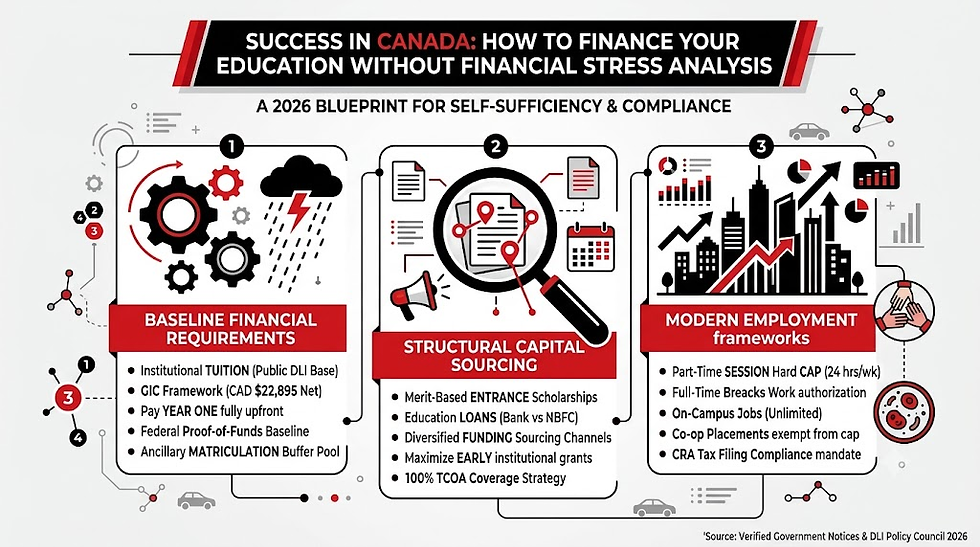
In contrast, specialized NBFC student loan products are structured around 100% Total Cost of Attendance (TCOA) coverage. They ensure all living costs, study supplies, and passage money are built directly into the disbursement schedule, so families don't have to scramble for out-of-pocket funds.
Handling the Moratorium Window
The moratorium is the grace period covering your course duration plus an extra 6 to 12 months before full EMI payments begin.
Public Lenders: Usually grant a clean holiday where no payments are required during your studies, or they allow you to pay simple interest to prevent the loan balance from growing. They are also the exclusive gateway to manage government-backed interest subsidy schemes (like the Central Sector Interest Subsidy) for lower-income households.
NBFC Lenders: Because they need active cash flow, NBFCs often require students to pay partial or full interest while in school. While this requires small monthly outlays during your studies, it helps control how much interest compounds, reducing your long-term debt burden.
Technical Matriculation Matrix: 2026 Education Loan Benchmarks
This performance reference matrix compiles the realistic loan limits, interest scales, processing metrics, and structural profiles for top lenders in 2026.
Target Financing Provider | Average Interest Rate Range (p.a.) | Unsecured Loan Limit Threshold | Standard Processing Speed Window | Best Suited Academic Route |
State Bank of India (SBI) | 8.15% – 10.15% | Up to ₹7.5L (₹50L for premier institutions) | 3 to 6 Weeks | Meritorious scholars holding physical collateral heading to top universities. |
Bank of Baroda (BoB) | 8.40% – 10.50% | Up to ₹40 Lakhs | 3 to 4 Weeks | Balanced options for premium domestic programs and mainstream overseas degrees. |
ICICI Bank | 9.25% – 13.50% | Up to ₹1 Crore (Select premier options) | 10 to 14 Business Days | Private-sector convenience with high unsecured limits for strong student profiles. |
HDFC Credila (NBFC) | 9.75% – 13.00% | Up to ₹80 Lakhs | 3 to 7 Working Days | Rapid processing for study abroad fields without pledging real estate assets. |
Avanse Financial (NBFC) | 10.25% – 15.00% | Up to ₹75 Lakhs | 3 to 5 Working Days | Complete TCOA coverage for unique majors, niche fields, and accelerated visa goals. |
Financial Risk & Underwriting Note "In 2026, the loan approval process moves beyond traditional credit scores. Lenders now analyze bank statements through automated Account Aggregators to review actual cash flow stability. Presenting a clean financial profile and a co-applicant with a solid credit history is essential to securing favorable interest terms." — Association of Certified Education Financing Consultants
FAQ Section
What is the most critical takeaway from this Bank vs NBFC Education Loans Analysis?
This bank vs nbfc education loans analysis demonstrates that choosing the right lender depends on your specific priorities. If your goal is minimizing long-term repayment costs and you have tangible property to pledge, a traditional public bank offers the best interest rates. However, if you face a tight deadline or lack collateral, an NBFC provides crucial flexibility and speed.
Can I get an education loan from an NBFC without any co-applicant income?
While NBFCs focus heavily on your future earning potential, they still require a credit-compliant co-applicant (such as a parent or sibling) to sign the loan. The co-applicant's credit profile acts as an institutional safety net, though their immediate salary matters less if you are attending a top-ranked global university.
How do floating interest rates differ between public banks and NBFCs?
Public bank floating rates are directly tied to repo rates set by the RBI, making them transparent and quick to drop when market benchmarks decline. NBFC floating rates are linked to their individual internal Prime Lending Rates (PLR), which can fluctuate based on their unique cost of borrowing market funds.
Is it possible to switch my loan from an NBFC to a bank later?
Yes, education loan refinancing is a common strategy. Many students use an NBFC to get fast approval ahead of tight visa deadlines, and then transfer the outstanding balance to a public bank after graduation to secure lower interest rates and reduce their EMIs.
Verify Financing Guidelines via Official Banking Registries
When tracking financial rules or comparing loan products, always consult official regulatory and higher education portals:
To check the baseline repo rate changes and review current lending rules for non-banking entities, visit the Reserve Bank of India (RBI) Regulatory Information Hub.
To explore government interest subsidy schemes, manage central credentials, and track participating public banks, visit the Vidya Lakshmi Education Loan National Portal.
To track institutional credit shifts and read multi-year lending market reports across the country, check the ICRA Credit Rating and Research Database.
Secure Your Academic Financing Foundation Today
Are you ready to turn these insights into a distinct career advantage? Don't leave your university selection, co-applicant processing, or loan comparison to last-minute guesswork.
Take a proactive step toward your future career by accessing interactive interest calculators, building a document checklist, and matching your profile with over 15 top lenders on the GradRight Education Loan Comparison Platform, and secure a high-value financial foundation today!


Comments