
Student Accommodation Abroad 2026: Dorms vs Shared Apartments vs Private Rentals Analysis

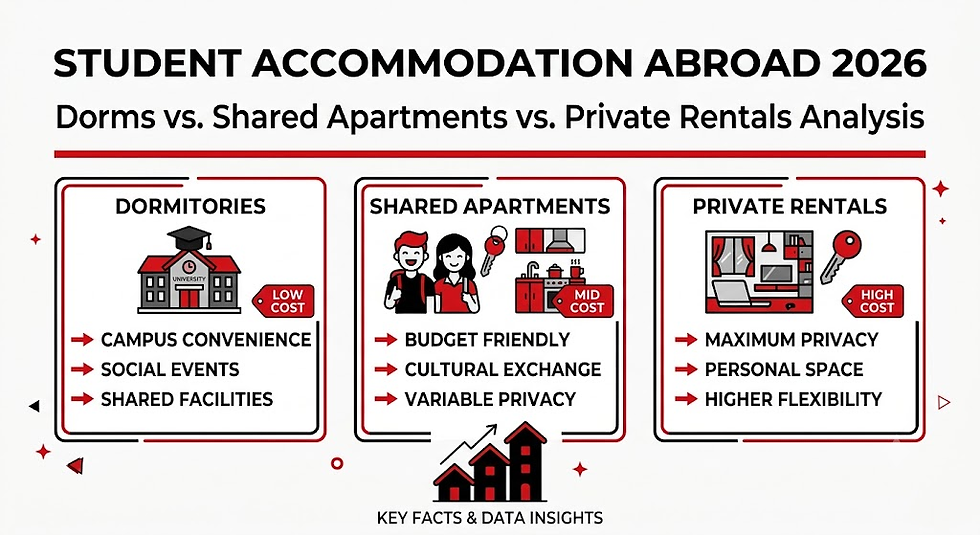
Securing the right place to live is one of the most critical decisions you will make when planning an international degree. Where you sleep, study, and socialise directly impacts your mental well-being, academic performance, and personal safety. However, with post-pandemic housing crunches across major education hubs in North America, Western Europe, the UK, and Australasia, international students face an increasingly complex housing market.
Choosing among on-campus university dormitories, off-campus shared apartments, and independent private rentals involves balancing lifestyle preferences, privacy requirements, lease flexibility, and overall cost.
This deep-dive guide breaks down student accommodation abroad options, comparing the three major housing pathways with the latest data, cost benchmarks, and practical decision-making frameworks.
The 2026 Global Student Housing Landscape
As global student mobility remains high, housing demand across university hubs has outpaced available supply. According to industry data, the global student accommodation market expanded to roughly $12.9 billion. Purpose-Built Student Accommodation (PBSA) and off-campus housing options currently represent over 60% to 70% of total market activity.
The combination of strict visa regulations on work hours, rising rent prices, and foreign exchange shifts makes housing choice a major factor in overall living expenses.
Below is an overview of the key financial benchmarks across top study abroad destinations:
Country / Region | University Dorms (Monthly) | Shared Apartments (Monthly) | Private Rentals / Studios (Monthly) |
United States | $1,000 – $1,800 | $700 – $1,400 | $1,500 – $3,500+ |
United Kingdom | £550 – £1,200 | £500 – £900 | £1,200 – £2,000+ |
Canada | CAD 900 – 1,400 | CAD 650 – 1,200 | CAD 1,500 – 2,200+ |
Australia | AUD 1,000 – 1,600 | AUD 900 – 1,300 | AUD 1,800 – 2,800+ |
Germany | €250 – €450 | €350 – €700 | €700 – €1,200+ |
1. University Dormitories: Convenience and Campus Integration
University-managed halls of residence (dorms) are often the default starting point for incoming undergraduate and postgraduate international students. Typically located directly on campus or within walking distance, dormitories prioritize safety, community integration, and simplified billing.
Key Advantages of University Dorms
All-Inclusive Financial Predictability: Utility bills—electricity, water, heating, and campus Wi-Fi—are bundled into a fixed seasonal or monthly fee.
Proximity to Academic Facilities: Living on campus reduces transit times and eliminates monthly public transport passes.
Built-in Social Architecture: Dorms facilitate quick social connections through resident advisors (RAs), organised orientation events, and common dining halls.
Potential Drawbacks
Lack of Personal Space: Shared bedrooms (double-sharing) or communal floor bathrooms can lead to friction around noise levels and sleep hygiene.
Seasonal Vacation Closures: Many North American and UK university dorms require students to vacate their rooms during summer and winter breaks, forcing international students to find temporary housing or pay storage fees.
Higher Unit Cost Per Square Foot: While convenient, dorms can be more expensive per square foot than off-campus shared flats in secondary cities.
2. Shared Apartments: The Balance of Cost and Autonomy
Shared private apartments—known as flats in the UK, WG (Wohngemeinschaft) in Germany, or flatshares in Australia—involve renting a private or shared bedroom within a multi-room residential unit, with shared common spaces like kitchens, living rooms, and bathrooms.
───┘
Key Advantages of Shared Apartments
Significantly Lower Living Expenses: Splitting general overhead costs—such as high-speed broadband, energy tariffs, and household goods—among 2 to 4 housemates keeps costs manageable.
Immersive Cultural Integration: Living with domestic or local students offers an opportunity to learn the local language, discover off-campus neighborhoods, and build a network outside university circles.
12-Month Lease Stability: Unlike temporary university dorms, standard private tenancy agreements run year-round, providing a stable housing base throughout academic terms and breaks.
Potential Drawbacks
Utility Volatility: Unless your landlord offers a bill-inclusive arrangement, fluctuating heating and electricity costs during winter months can cause sudden expense spikes.
Roommate Compatibility Risk: Conflicts over cleanliness, shared chores, noise, and bill distribution can create unnecessary stress.
Upfront Bureaucracy: Securing a shared flat often requires providing local financial guarantors, large security deposits (typically 1 to 2 months' rent), proof of enrollment, and local credit checks.
3. Private Rentals & Studios: Privacy and High-End Living
Private rentals consist of self-contained studio apartments, 1-bedroom flats, or premium Purpose-Built Student Accommodation (PBSA) studio units. This tier appeals primarily to postgraduate researchers, mature students, or those with dedicated financial support.
Key Advantages of Private Rentals
Maximum Autonomy and Focus: Studios offer full control over your environment, schedule, and study conditions, making them ideal for intensive research degrees.
Modern Amenities in PBSAs: Modern private student complexes frequently feature 24/7 security, private gyms, cinema rooms, quiet study suites, and concierge services.
Long-Term Independence: Independent leases give you total control over house rules, visitors, and personal decorations without relying on roommates.
Potential Drawbacks
High Financial Investment: Studio units in Tier-1 university cities routinely cost 50% to 100% more than shared accommodation arrangements.
Social Isolation Risks: Without built-in common areas or housemates, students living alone must make an extra effort to participate in campus clubs and social events.
Full Utility Responsibility: You carry 100% of the financial burden for utility contracts, Wi-Fi installation, local council tax exemptions (where applicable), and maintenance arrangements.
Evaluating Your Options: Decision-Making Matrix
To help determine which housing category fits your personal goals and budget, evaluate how each option aligns across key factors:
Practical Checklist Before Signing a Lease
Before transferring deposits or signing legally binding tenancy agreements, run through these essential checks:
Verify All-Inclusive Items: Clarify whether the listed monthly rent covers heating, water, electricity, council tax/local residency fees, and internet service.
Review Student Tax Exemptions: In countries like the UK, full-time international students are exempt from local Council Tax. Ensure your landlord or local authority registers your student status correctly to avoid unexpected bills.
Inspect Safety Certifications: Confirm the property meets local fire safety regulations, includes working smoke alarms, and provides secure locks on all exterior entry points.
Identify Commute Costs: A lower rent payment located 45 minutes outside the city can easily be offset by monthly public transport costs. Calculate total monthly transit costs before signing an off-campus lease.
Beware of Rental Scams: Never transfer money or security deposits before verifying the property owner's credentials, reviewing an official contract, or conducting a live video walkthrough.
Frequently Asked Questions
Which option offers the best value when comparing student accommodation abroad options on a tight budget?
Shared apartments (flatshares) consistently offer the best value for budget-conscious students. By splitting baseline rent, high-speed internet, and daily utilities among housemates, total monthly spending is significantly lower than private studios or premium campus housing.
How far in advance should I book my student accommodation abroad?
Begin your housing search 3 to 6 months prior to your official program start date. University dormitories and subsidized student halls open their application windows early, and peak off-campus leasing cycles in top university cities fill up rapidly before the autumn term starts.
Do private rentals require an international financial guarantor?
Yes, private landlords in the US, UK, Canada, and Australia frequently require international students without local credit histories to present a local guarantor or pay 3 to 6 months of rent in advance. Alternatively, students can use recognized third-party institutional guarantor services for a small fee.
Take the Next Step in Your International Journey
Securing comfortable, affordable housing is the foundation of a successful study abroad experience. By analyzing housing types early, setting clear spending limits, and carefully reading lease terms, you can find a living arrangement that fits your academic goals and lifestyle preferences.
Search University Rankings & City Profiles: Compare institutional options and host locations on TopUniversities (QS World University Rankings) to understand neighborhood layouts and local costs.
Estimate International Living Budgets: Plan your monthly budget and compare currency transfer rates using the Wise Currency Converter to avoid hidden banking fees.
Review Official Student Visa Housing Rules: Ensure your accommodation aligns with entry conditions by checking official guidelines on the USCIS Official Portal or the UK Government Student Visa Guidance.


Comments