
Melbourne vs Sydney vs Brisbane: Comparing Student Life for International Students Analysis

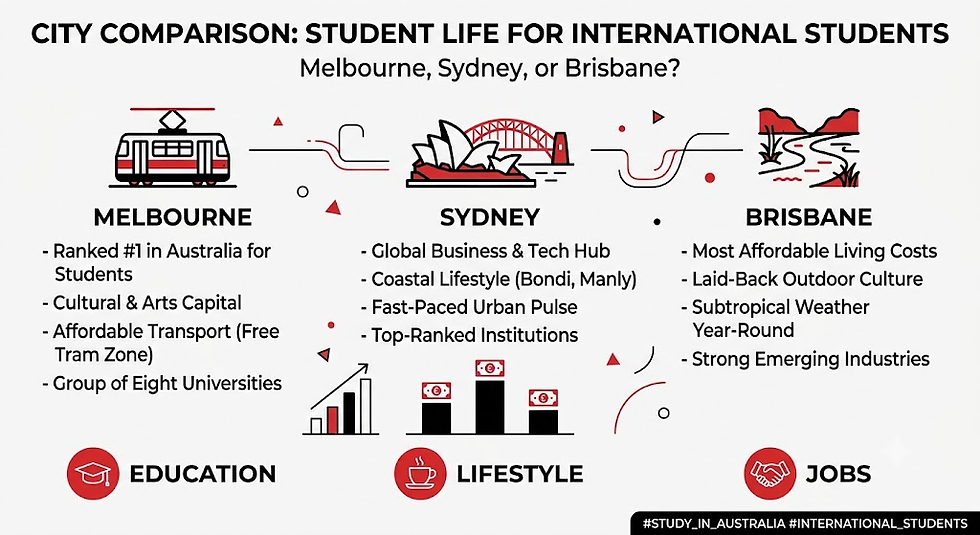
Australia remains a primary global destination for higher education, offering world-class universities, high standards of living, and clear post-study career pathways. However, selecting the ideal study destination involves more than choosing an academic program. City culture, living costs, accommodation availability, climate, and local networking opportunities heavily shape your overall experience.
Melbourne, Sydney, and Brisbane stand as Australia's top three university hubs. Each metropolis offers a distinct environment tailored to different academic preferences, budgets, and personal lifestyles. This comprehensive comparative analysis breaks down student life for international students across these key urban centers to help you make an informed choice.
At a Glance: City Comparison Overview
Feature / Metric | Melbourne | Sydney | Brisbane |
QS Best Student City Ranking | #4 Globally | #7 Globally | Top 25 Globally |
Top Universities | Univ. of Melbourne, Monash, RMIT, Deakin | USYD, UNSW, UTS, Macquarie | UQ, QUT, Griffith |
Average Weekly Rent (Shared) | $270 – $380 AUD | $350 – $500 AUD | $250 – $360 AUD |
Climate | Temperate, variable ("4 seasons in a day") | Coastal temperate, sunny summers | Subtropical, warm year-round |
Primary Industry Strengths | Tech, Arts, Finance, Biomedical | Finance, Tech, Global Trade, Media | Clean Energy, Logistics, Tourism |
Lifestyle & Vibe | Cultural, artsy, coffee capital | Vibrant, coastal, fast-paced | Outdoor-oriented, laid-back, sunshine |
1. Academic Excellence and Institutional Reputation
All three cities host globally renowned institutions ranked within the top tier of international academic standards.
Melbourne: The Cultural & Research Powerhouse
Melbourne holds Australia’s top spot in international university rankings. Home to the University of Melbourne and Monash University (both Group of Eight members), alongside major applied institutions like RMIT University and Deakin University, it attracts students seeking strong research initiatives, creative industries, and innovation hubs.
Sydney: The Global Business Hub
Sydney's higher education system is anchored by the University of Sydney and UNSW Sydney (University of New South Wales), both ranked in the global top 20. Complemented by the University of Technology Sydney (UTS) and Macquarie University, Sydney excels in finance, corporate law, engineering, and global commerce connections.
Brisbane: The Emerging Science & Innovation Center
Brisbane features the University of Queensland (UQ), a global leader in environmental sciences, biotechnology, and agricultural research. Queensland University of Technology (QUT) and Griffith University offer strong industry-integrated programs with lower student competition compared to southern capitals.
2. Cost of Living and Housing Realities
Managing expenses is a core consideration for foreign candidates. Rent, public transport, and daily living costs vary substantially across Australia's eastern seaboard.
Key Living Expense Factors:
Sydney: Features Australia’s highest housing market expenses. Shared room rentals in inner-city suburbs (e.g., Ultimo, Kensington, Randwick) range from $350 to $500 AUD weekly.
Melbourne: Offers a more balanced housing spread. While inner-city student accommodation can be premium, accessible tram networks allow affordable living in inner-north or eastern suburbs (e.g., Carlton, Brunswick, Clayton).
Brisbane: Remains the most budget-friendly of the three major cities. Shared accommodation options in suburbs near UQ (St Lucia) or QUT (Kelvin Grove) cost significantly less than Sydney equivalents.
3. Lifestyle, Urban Culture, and Public Transport
Public Transport Infrastructures
Melbourne: Features an iconic, extensive tram network, including a Free Tram Zone within the central business district (CBD) that lowers daily commuting costs for students.
Sydney: Uses an integrated network of trains, metro lines, buses, and ferries (Opal card system). While extensive, longer commute distances from outer suburbs increase weekly travel fees.
Brisbane: Offers Translink bus, train, and CityCat ferry networks. Queensland provides a standard 50% public transport discount for eligible full-time tertiary international students across state networks.
4. Work Opportunities and Graduate Pathways
A key element shaping student life for international students is access to casual employment during study terms and professional graduate positions following degree completion.
Employment Landscapes:
Sydney: Offers Australia's largest concentration of corporate headquarters, financial institutions, and multinational tech firms. Higher competition is offset by a massive volume of entry-level and casual openings.
Melbourne: Highly diverse market for casual work across hospitality, arts festivals, retail, and events. Strong professional opportunities exist in health tech, software engineering, and education.
Brisbane: Experiencing steady infrastructure investment leading up to the 2032 Brisbane Olympic Games. Opportunities in civil engineering, project management, sustainable energy, and tourism are growing rapidly.
FAQ: Student Life for International Students
Q1: Which city offers the most affordable student life for international students?
Brisbane is generally the most cost-effective option among the three major eastern cities. It features lower average rent costs, a 50% state concession on public transport for tertiary students, and lower general daily expenses while maintaining access to a world-top-50 university.
Q2: How does public transport accessibility compare between Melbourne and Sydney for foreign students?
Melbourne offers a key advantage with its CBD Free Tram Zone, allowing free travel within the central university district. Sydney provides an integrated Opal network covering trains, light rail, and ferries, but travel costs increase as you move further from central campuses.
Q3: Are part-time job opportunities abundant in all three cities?
Yes. All three cities feature strong service, hospitality, and retail markets suitable for international candidates. Sydney and Melbourne offer higher overall job volumes, while Brisbane provides less job competition per student applicant.
Final Decision Checklist
[ ] Choose Melbourne if you value cultural arts, sports events, vibrant cafe cultures, and a top-ranked academic environment.
[ ] Choose Sydney if you thrive in a fast-paced global metropolis, prefer coastal beach living, and target corporate finance or technology careers.
[ ] Choose Brisbane if you prefer warm subtropical weather, a relaxed outdoor lifestyle, lower rent expenses, and rapid growth opportunities.
Official Educational & Student Support Resources
Make an informed decision by reviewing official state and national international education portals:
Explore study options across Victoria on the Study Melbourne Official Portal.
Discover student programs in New South Wales via Study NSW Support Services.
Learn about Queensland study pathways on the Study Queensland Official Site.


Comments